
His Family Thought He Was Just Being Difficult On Holiday — Then His Son Realised Why He Kept Disappearing Every 20 Minutes
July 16, 2026

ORLANDO, FLORIDA – Nobody wanted to say anything at first. Not his wife, not his daughter-in-law, and not even his son, who had been watching it happen all morning.
But by the third time 62-year-old Richard Harris disappeared from the queue, everyone had noticed.
They were meant to be having a family holiday, the kind Richard had talked about for months. His grandson’s first big trip. Matching t-shirts. Too many photos. Expensive snacks. The whole thing. Richard had promised he would be “fully present” this time — no work calls, no excuses, no sitting on benches while everyone else made memories.
But less than two hours into the day, he had already left the group three times. Each time, he gave a different reason. He was checking the map. He was grabbing water. He would be back in a minute. But his son, Mark, knew something was off, because every time Richard returned, he looked a little more frustrated. And every time the family moved further away from the nearest restroom, Richard got quieter.
“At first I thought Dad was just tired,” Mark says. “Then I realised he wasn’t tired. He was worried.”
The moment everyone stopped pretending came just before lunch. The family had finally reached the front of a ride queue after waiting nearly 45 minutes in the heat. Richard had been joking with his grandson, trying to act normal, trying to stay relaxed. Then his expression changed just enough for Mark to notice.
Richard glanced toward the exit, then toward the restroom sign in the distance, then back at the line.
“You alright?” Mark asked.
Richard nodded too quickly. “I’m fine.”
But a minute later, he stepped out of the queue again. His grandson looked confused and asked, “Grandad’s leaving again?”
Nobody answered.
Richard heard him. And that was the part that hurt.
“It sounds silly,” Richard says. “But I felt embarrassed. Not because I needed the toilet. Everyone needs the toilet. It was because I couldn’t trust myself to just enjoy the day.”
For months, Richard had been dealing with something he did not want to talk about. More frequent bathroom trips. A weaker flow than he remembered. That annoying stop-start feeling. The sense that he had not fully finished, even after standing there longer than he used to. At night, the same pattern repeated. He would wake once, then again, then sometimes once more before morning.
At first, he blamed tea. Then he blamed age. Then he blamed long drives, restaurants, cold weather, and anything else that made the explanation feel less personal. But privately, Richard knew something had changed.
Without realising it, he had started planning his life around toilets. He used the bathroom before leaving the house, then again when he arrived somewhere. He chose aisle seats. He avoided long films. He checked petrol stations on road trips. He pretended he wanted to stretch his legs when really he wanted to know where the nearest restroom was.
His wife noticed too. She noticed the way he became tense before journeys, the way he stopped drinking water if they were going out, and the way he became irritated when plans changed suddenly. She also noticed that he refused to talk about it, even when it was clearly bothering him.
“He’d say, ‘I’m fine,’ but he wasn’t fine,” she says. “He was adjusting his whole life around it.”
Richard hated that. He had always been the steady one — the one who drove through the night when the kids were young, the one who carried bags, fixed things, handled bookings, found solutions. Now he was the one asking where the restroom was. The one slowing everyone down. The one disappearing from family moments he had paid good money to be part of.
The holiday made it impossible to ignore.
That afternoon, while the rest of the family ate lunch, Richard sat at the end of the table and barely touched his food. His grandson was showing everyone a souvenir toy. His wife was taking photos. His son was laughing about the ride. Richard smiled along, but inside, he felt defeated.
“I remember thinking, I flew all this way to be with my family, and all I can think about is the bathroom,” he says.
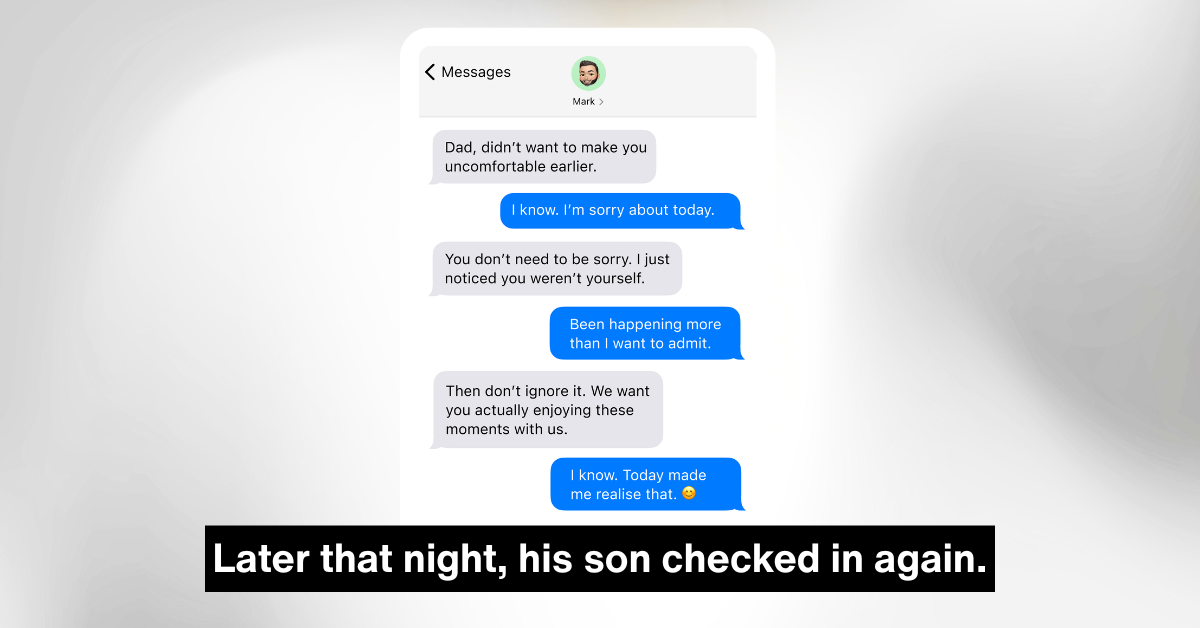
Later that evening, after everyone went back to their hotel rooms, Mark knocked on his father’s door. He did not make a joke or tease him. He simply asked, “Dad, is this happening a lot?”
Richard almost denied it. Then he saw the look on his son’s face. Not judgement. Concern.
For the first time, Richard admitted the truth.
“Yes,” he said. “More than I want to admit.”
That conversation changed something. Not because Mark had a magic answer, but because Richard finally stopped treating it like a private inconvenience he had to hide. When he got home, he began paying attention properly. He read about men’s prostate health, urinary flow, bladder comfort, and the way many men quietly start changing their routines after 50 without ever talking about it.
“What surprised me was how common it was,” Richard says. “I thought I was just becoming old and difficult. But a lot of men go through this. They just keep quiet.”
Richard did not want drama. He did not want to feel helpless. And he did not want another “men’s health” product that felt like it was shouting at him. He wanted something simple he could add to his day before the problem kept taking more of his life.
So he made one quiet change to his morning routine.
He did not announce it. He did not tell the whole family. He just started doing it every day.
For the first couple of weeks, life carried on as normal. He still had errands, still had nights where sleep was not perfect, and still had days where he felt conscious of his routine. But slowly, he noticed he was thinking about the bathroom less. He felt more comfortable leaving the house. He was not checking for the nearest restroom the second he arrived somewhere. And the night-time interruptions did not feel like they were running his life in the same way.
“It wasn’t like I woke up one day and everything was magically different,” Richard says. “It was more like I realised I wasn’t planning every hour around the toilet anymore.”
The real test came two months later, at his grandson’s school football match. Normally, Richard would have chosen a spot near the exit. Normally, he would have gone “just in case” before kick-off. Normally, he would have spent half the match thinking about whether he needed to go again.
But that day, he stood by the fence with the other parents and grandparents and watched the whole first half. Then the second. When his grandson scored, Richard was there to see it — not walking back from the toilet, not standing in a queue, but actually there.

“I know it sounds small,” Richard says. “But after what happened on holiday, being present for that moment meant everything.”
After the match, his son clapped him on the shoulder.
“You didn’t disappear once today,” Mark said.
Richard laughed, but later, in the car, he realised how much that sentence meant. Because the change was not just about bathroom trips. It was about dignity. Confidence. Sleep. Family. Feeling like he could say yes to life without quietly mapping the nearest restroom in his head.
His wife noticed too. One morning, while they were having coffee, she told him he seemed more relaxed.
Richard nodded, because he felt it. Not younger. Not invincible. Just more like himself.
Weeks later, when Mark asked what had changed, Richard finally told him. It was not an extreme routine, some embarrassing treatment he had been hiding, or another habit he would abandon after a week.
It was one simple daily prostate support routine he had started after realising he was tired of letting bathroom worries decide what he could enjoy.
Click here to figure out why men across the US are adding Ultra ProSupport to their daily routine for prostate health, urinary flow, bladder comfort, and confidence.
👉 Click here to figure out why men across the US are adding Ultra ProSupport to their daily routine for prostate health, urinary flow, bladder comfort, and confidence.
CUSTOMER REVIEWS
Richard H., 62, London
“I didn’t realise how much I was planning around restrooms until my family pointed it out. I was always going ‘just in case’ before leaving the house, before getting in the car, before sitting down anywhere. Ultra ProSupport has helped me feel more comfortable and less controlled by that worry. It’s not something men like talking about, but I’m glad I finally did something about it.”
Michael T., 58, Bristol
“The biggest difference for me has been feeling more relaxed when I’m out with my family. Before, I’d always be checking where the nearest bathroom was. Since taking Ultra ProSupport, I feel more in control of my routine and I’m not thinking about it every five minutes.”
Alan R., 67, Leeds
“I used to get up at night, then wake up tired and annoyed before the day even started. I also hated that stop-start feeling when I went to the bathroom. Ultra ProSupport has become part of my morning routine now. I feel more settled, sleep feels less interrupted, and my wife says I seem less grumpy.”
Have The Peace of Mind To Purchase
With Our 100% Money-Back Guarantee
Here at Autoimmune Institute, we make sure our customers love their product and that everyone can try it completely risk-free, or we will refund 100% of their investment with no questions asked. We’re so confident that you’ll enjoy Advanced Turmeric, we are willing to bear the risks!

90-Day Money-Back Guarantee

Made in The UK To The Highest Manufacturing Standards

100% Natural: No Binders, Fillers and Flowing Agents
[Advertorial]
Disclaimer: This article is a paid advertorial. The stories, names, and characters featured may be fictionalised for illustrative purposes. Individual results may vary. This product is not intended to diagnose, treat, cure, or prevent any disease.