
A 52-Year-Old Mum Tried To Laugh Off Her Constant Bathroom Trips, But One Car Journey Made Her Realise She Wasn’t In Control Anymore
July 2, 2026

BRIGHTON, UK – For years, Claire Bennett had a joke ready whenever she disappeared to the toilet again.
“Bladder of a nervous toddler,” she would say, usually with a laugh, before anyone else could comment.
Her friends laughed. Her husband laughed. Claire laughed too. But by the time she turned 52, the joke had stopped feeling funny.
What started as the odd extra bathroom trip had slowly become something she planned around. Before leaving the house, she would use the toilet. Before getting in the car, she would go again. At restaurants, she preferred sitting near the aisle. At the cinema, she avoided the middle seats. During longer journeys, she would quietly count how far they were from the next service station.
“I made jokes because it was easier than admitting I was worried,” Claire says. “But honestly, I was thinking about it all the time.”
The moment she stopped laughing happened during what should have been a simple Saturday drive to visit her daughter.
It was only meant to be two hours. Claire had used the toilet before they left, avoided coffee that morning, and told herself she would be fine. But less than 40 minutes into the journey, while her husband chatted about traffic and the radio played in the background, she felt that familiar pressure again.
At first, she tried to ignore it. She shifted in her seat, crossed her legs slightly, checked the map on her phone, and tried to calculate whether they could make it to the next services without making a fuss.
“I remember feeling annoyed more than anything,” she says. “I’d already gone before we left. I thought, how is this happening again?”
Eventually, she asked her husband how far they were from the next service station, trying to sound casual. But after years of marriage, he knew exactly what she meant.
“He just looked at me and said, ‘Again?’ Not in a cruel way. He wasn’t trying to embarrass me. But I felt annoyed.. may be annoyed at him, but may be more annoyed at myself”
By the time they pulled into the service station, Claire was already panicking. She opened the car door almost before her husband had fully parked and hurried across the forecourt, trying to walk normally while her body screamed at her to move faster.
Before she reached the toilet, she already knew.
She had leaked a little.
Not enough for anyone else to notice. Not enough to make a scene. But enough for Claire to feel the embarrassment rush through her body before she had even locked the cubicle door.
“Honestly, I wanted the ground to swallow me,” she says. “I was a grown woman, a mum, someone who had always been organised and in control. And there I was in a public toilet, knowing I hadn’t quite made it.”
She sat there for a moment longer than she needed to. Not because anyone had seen. They hadn’t. But because she had.
“That was the part that upset me,” Claire says. “It wasn’t public embarrassment. It was private embarrassment. I couldn’t laugh it off anymore because I knew how much it was affecting me.”
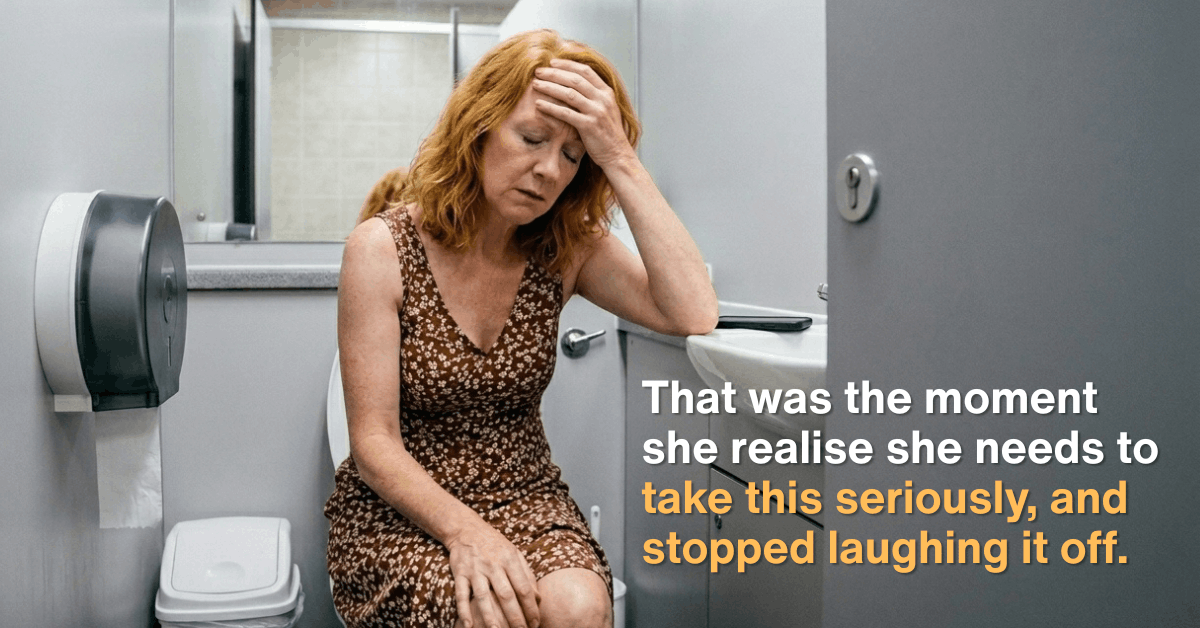
When she washed her hands afterwards, she caught herself in the mirror and had a thought she could no longer avoid.
“I’m planning my life around my bladder.”
And once she admitted that, Claire began noticing all the ways she had been quietly adjusting her life.
She was saying no to plans if she wasn’t sure about the toilet situation. She was getting irritated when people rushed her out the door. She was avoiding certain clothes on days she felt uncomfortable. She was drinking more, then drinking less, then wondering if she was doing either one wrong. She bought cranberry drinks, cut back on coffee, tried to “be sensible”, and kept telling herself it was probably hormones, stress, or just one of those things women put up with.
But none of those explanations made her feel any more relaxed.
“It wasn’t just the bathroom trips,” she says. “It was the worry before the bathroom trips. That was exhausting. You’re sitting there trying to enjoy dinner, but part of your brain is already asking, should I go now just in case?”
Her husband noticed the change too, even though Claire rarely spoke about it directly. She had become more hesitant before leaving the house. She asked more questions before journeys. She got snappy when plans changed suddenly. And she rarely seemed fully relaxed when they were away from home.
“He’d ask if I was alright and I’d say, ‘I’m fine,’ but I wasn’t,” Claire says. “I was fed up. I felt like my body kept interrupting my day.”
What made it worse was how lonely it felt. Claire did not want to make it sound serious. She did not want to become “that woman” who was always talking about bladder issues. And she definitely did not want to admit how much confidence she had lost over something so private.
So she kept making jokes.
Until that car journey made her realise she was tired of pretending.
That evening, while her husband watched television, Claire sat on the sofa and started reading. Not in a panic, and not because she expected a miracle. She just wanted to understand why so many women seemed to deal with urgency, bladder discomfort, and the constant “just in case” toilet habit.
“What shocked me was how familiar it all sounded,” she says. “Women were describing the exact thing I’d been hiding. The worry before going out. The discomfort. The fear of being stuck somewhere when that feeling comes back.”
That was when Claire came across Prime FemFlow, a daily women’s bladder and urinary tract support supplement.
What caught her attention was not a dramatic promise. It was that the formula seemed to match the kind of support she had been looking for. It included D-Mannose, Aloe Vera, Olive Leaf Extract, Turmeric Extract, Pear, Black Soybean Extract, Black Pepper Extract, and digestive enzymes.
“I didn’t want something that made me feel broken,” Claire says. “I wanted something that felt sensible. Something I could do daily instead of constantly reacting when things felt uncomfortable again.”
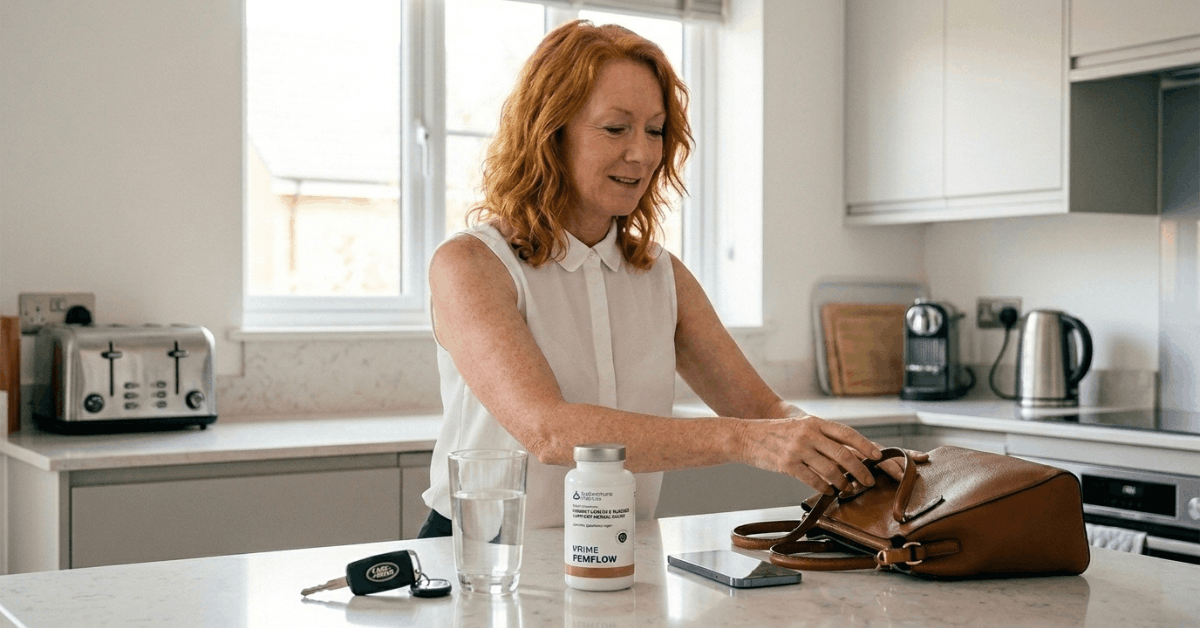
She started taking it quietly. No big announcement. No dramatic lifestyle change. Just a small daily routine she could stick to.
Over the next few weeks, Claire began to feel small but meaningful changes in the way she moved through her day. She felt less on edge before leaving the house. She was not running to the toilet “just in case” quite as often. She felt more comfortable sitting through meals. And, perhaps most importantly, she stopped checking for the toilet the second she walked into every new place.
“It wasn’t fireworks,” she says. “It was more like one day I realised my bladder wasn’t the first thing on my mind.”
The real test came a month later, on another car journey. Again, visiting her daughter. Same route. Same risk of traffic. Same service stations along the way.
But Claire noticed she felt different before they had even left the driveway.
“I wasn’t doing all the mental calculations,” she says. “I wasn’t sitting there thinking, what if I need to stop again? I was just going on the journey like a normal person.”
They drove for over an hour before stopping. Not because Claire panicked. Not because she demanded it. Just because everyone wanted coffee.
“That probably sounds tiny to someone who hasn’t dealt with it,” she says. “But to me, it felt like getting a piece of myself back.”
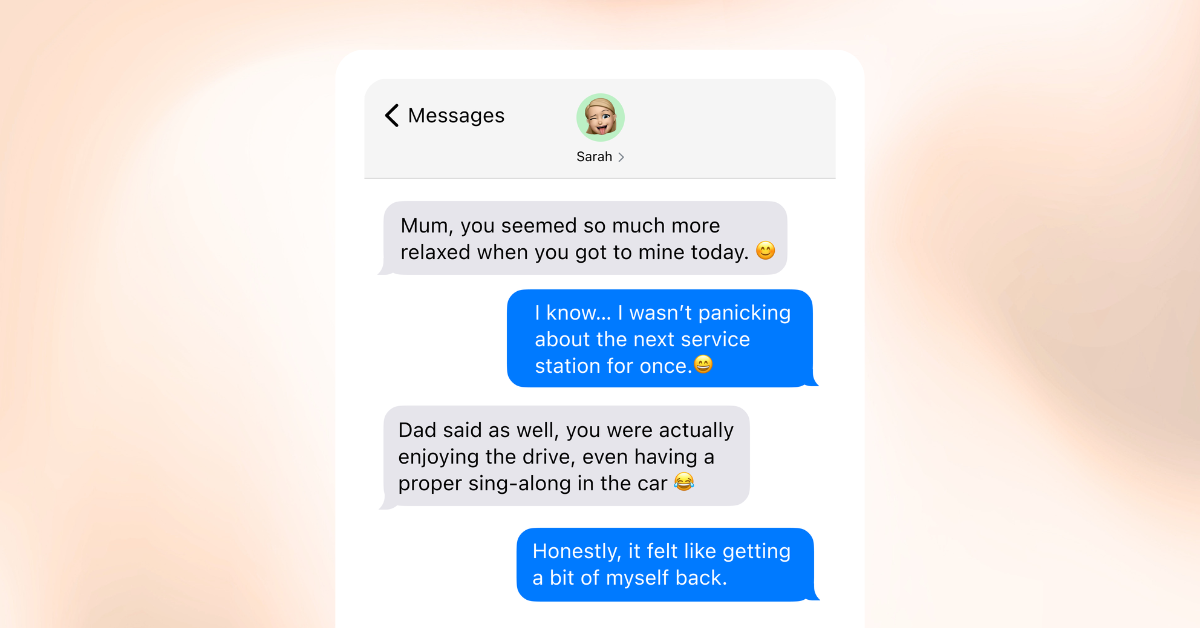
Her husband noticed too.
“He said I seemed more relaxed lately,” Claire says. “And he was right. I wasn’t snapping as much. I wasn’t tense every time we left the house. I felt more like myself.”
For Claire, the biggest difference was not just physical. It was emotional.
She felt less embarrassed. Less restricted. Less like every outing came with a private worry sitting in the back of her mind.
“When you’re dealing with bladder worries, it’s not just about needing the toilet,” she says. “It’s the confidence you lose. The plans you avoid. The little ways your life gets smaller without you admitting it.”
Now, Prime FemFlow is part of Claire’s daily routine. She still listens to her body, and she still believes women should take urinary discomfort seriously. But she no longer feels like she has to laugh it off while secretly worrying in silence.
“I wish I’d stopped pretending sooner,” Claire says. “So many women deal with this quietly. We make jokes, we brush it off, but it really can affect your life.”
Claire’s story is far from unusual. Across the UK, more women are beginning to talk about the bladder worries they used to hide: the urgency, the discomfort, the “just in case” toilet trips, and the fear of being stuck in a car, meeting, cinema, restaurant, or queue when that feeling comes back.
Not because they want attention.
Because they want to feel normal again.
For Claire, that was the real win. Not expecting perfection. Not pretending nothing ever happens. Just feeling more comfortable, more confident, and less controlled by her bladder.
“I still joke about things,” she says. “That’s just me. But now I’m not using jokes to hide how worried I am.”
If you keep running to the bathroom “just in case”, feel nervous before car journeys or long days out, or feel like recurring bladder discomfort has started affecting your confidence, it may be time to support your bladder routine differently.
Prime FemFlow is helping women across the UK support urinary tract health, bladder comfort, and daily confidence.
👉 Click here to see how Prime FemFlow can support your daily bladder and feminine wellness routine.
CUSTOMER REVIEWS
Megan R., 34, Bristol
“I kept getting that uncomfortable ‘here we go again’ feeling and immediately spiralling. Prime FemFlow has become part of my morning routine now. I feel more settled and less like I’m waiting for my bladder to ruin the day.”
Claire B., 52, Manchester
“I used to go to the toilet before leaving the house, then again when I arrived somewhere, just in case. It sounds small, but it made me anxious about car journeys and dinners out. Since taking Prime FemFlow, I feel much more comfortable and less on edge. I still listen to my body, but I’m not planning everything around the nearest toilet anymore.”
Jasmine L., 29, London
“I bought this after seeing D-Mannose on the ingredient list because I’d been looking for something gentle for daily urinary support. I like that it doesn’t feel harsh or complicated. I just take it every day and feel like I’m doing something proactive instead of panicking every time something feels off.”
Have The Peace of Mind To Purchase
With Our 100% Money-Back Guarantee
Here at Autoimmune Institute, we make sure our customers love their product and that everyone can try it completely risk-free, or we will refund 100% of their investment with no questions asked. We’re so confident that you’ll enjoy Advanced Turmeric, we are willing to bear the risks!
90-Day Money-Back Guarantee

Made in The UK To The Highest Manufacturing Standards

100% Natural: No Binders, Fillers and Flowing Agents
[Advertorial]
Disclaimer: This article is a paid advertorial. The stories, names, and characters featured may be fictionalised for illustrative purposes. Individual results may vary. This product is not intended to diagnose, treat, cure, or prevent any disease.